
Raise a Child Who Can Think Fast, Stay Safe, and Solve Real-Life Problems.
A practical program for kids that builds street smarts, quick thinking, logical decision-making, and real-world problem-solving—while staying kind and safe.





The World Is Fast, But Thinking Is Slow


Without smart thinking, they become easy to influence.
We can’t control the world around them.
We can train them to pause, think, and choose—even when things get tricky.
Gen Alpha kids are surrounded by information, screens, and influence. But when real situations come, many:
Follow friends without thinking
Freeze when something unexpected happens
Panic when plans change
Struggle to say “no” or set boundaries
Believe anything that sounds confident (online or offline)
Kids today learn facts fast—but real-life decisions confuse them.
Why This Course Is Needed
Kids need more than marks. They need:
Street smarts – noticing danger, staying safe, asking for help
Logical thinking – understanding cause and effect
Quick decision-making – what to do right now
Problem-solving – finding options when things go wrong
Social intelligence – reading people, handling pressure
School teaches ‘what’ to think.
Smart Thinking teaches ‘how’ to think.
We are not giving them answers for every situation.
We are giving them a toolbox so they can handle any situation better.
What Changes You’ll See in Kids
You’ll see your child become sharper, calmer, and more capable.


Before: follows friends into a risky situation → later regret
After: pauses, thinks, and says, “This doesn’t feel right. I’m out.”
Your child will begin to:
Pause and think before reacting or following others
Spot red flags (unsafe people, unsafe situations, unsafe online behavior)
Make smart choices under pressure
Solve small problems on their own (without always running to you)
Speak up for themselves (polite but firm boundaries)
Plan better for school, friends, and activities
This Course Helps to Overcome Life Hurdles
Smart Thinking is a shield and a compass for your child.
Peer pressure
Saying “no” without losing respect. Choosing what’s right over “what everyone is doing.”
Recognising unsafe behavior, asking for help, knowing what information NOT to share.
Handling teasing, group politics, and conflicts with solutions, not drama.
Strangers & tricky adults
School and social challenges
It prepares the kids for:
Digital & online risks
Spotting scams, bad links, manipulative messages, and too-good-to-be-true offers.
Unexpected problems
Getting lost, plans changing, missing items, mistakes—staying calm and solution-focused.
A child who can think smart in small things today will handle big things better tomorrow
Curriculum
Week 1 to 3: Pause & Think – The Smart Kid Rule
The power of pause
Simple thinking rule: “What happens if I do this?”
Practice with fun, low-risk scenarios
Week 4 to 6: Street Smarts & Safety Basics
Safe vs unsafe places & behaviors
Who to trust, how to ask for help
“If I’m uncomfortable, I leave + tell”
Week 7 to 9: Saying No & Setting Boundaries
Scripts for saying no politely but firmly
Peer pressure roleplays (“Come on, just do it…”)
Respecting own and others’ boundaries
Week 13 to 15: Smart Decisions Online
Don’t click / don’t share / don’t trust blindly
Realistic examples: messages, links, strangers online
“Stop–Check–Ask” routine
Week 16 to 18: Thinking Under Pressure
What to do when scared/embarrassed/put on the spot
Simple internal script: “Pause, breathe, choose”
Quick decision practice with timers (safe, playful)
Week 19 to 21: People Smarts (Social Intelligence)
Reading tone, body language, intent
Spotting fake flattery vs true friendship
Being kind but not a pushover
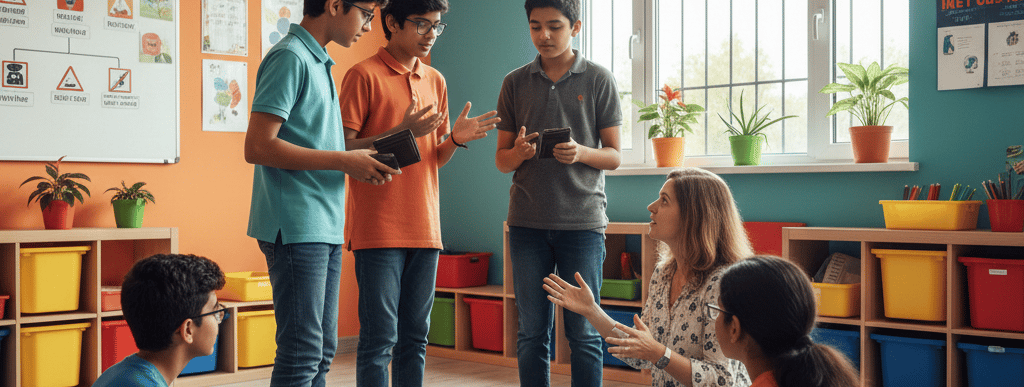
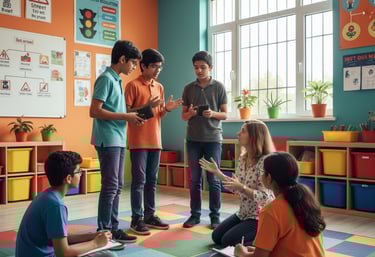
Week 10 to 12 : Problem-Solving – The 3 Options Rule
Every problem = at least 3 options
Evaluate options using simple questions (safe? kind? smart?)
Group challenge: solve a fun mission
Week 22 to 24: Smart Thinking Challenge Week
Team missions (plan, decide, act)
Personal “Smart Kid Code” (their rules for life)
Mini showcase: kids explain how they’d handle different situations
hello@smartroots.in
© 2026. All rights reserved.
Program
SmartRoots is a Life Skills & Personality Development Coaching Center helping children and teenagers build confidence, communication, focus, emotional awareness, and practical life skills through activity-based learning.
📍 A-2/155, Kalyani, Nadia, West Bengal, India